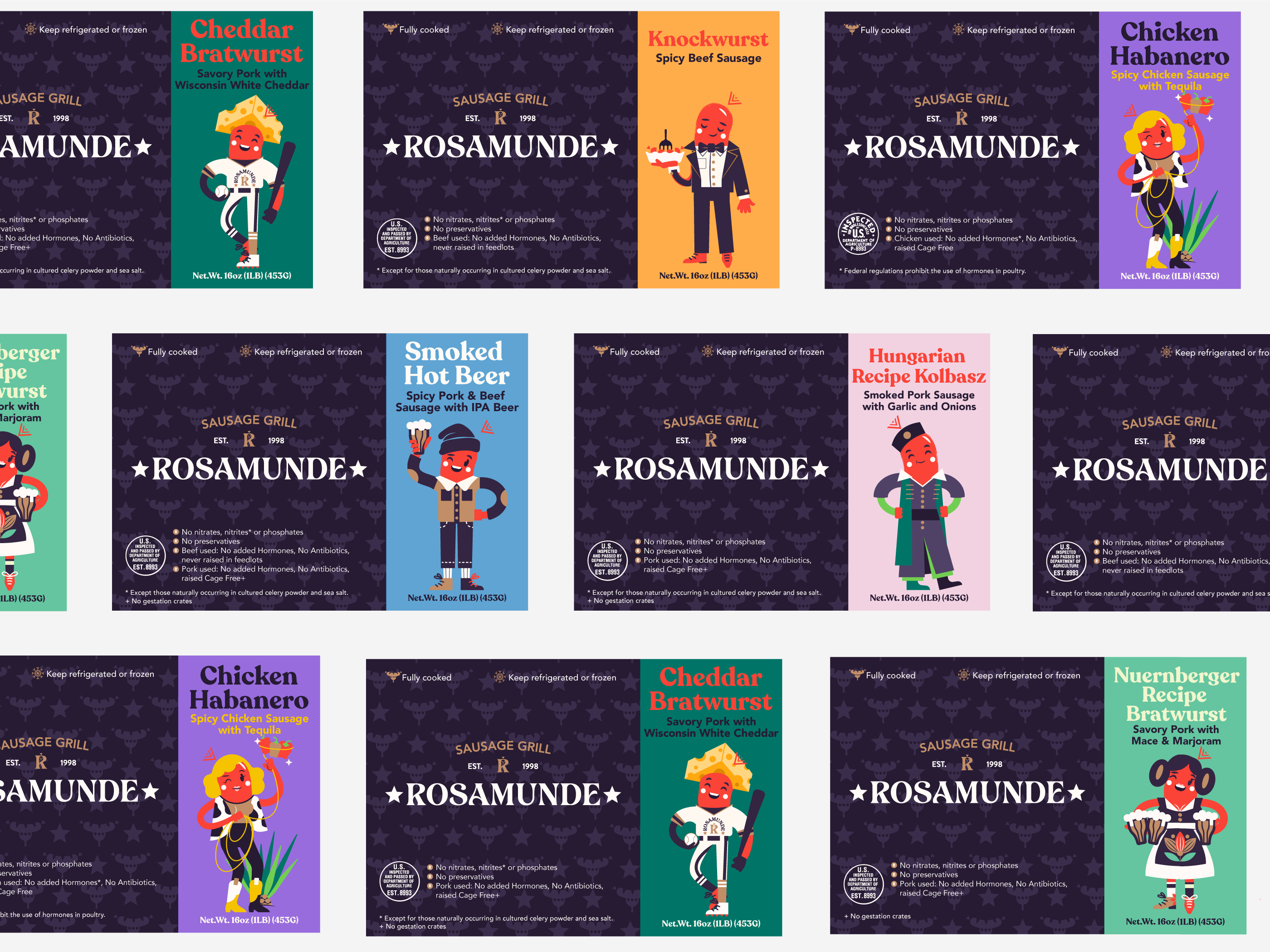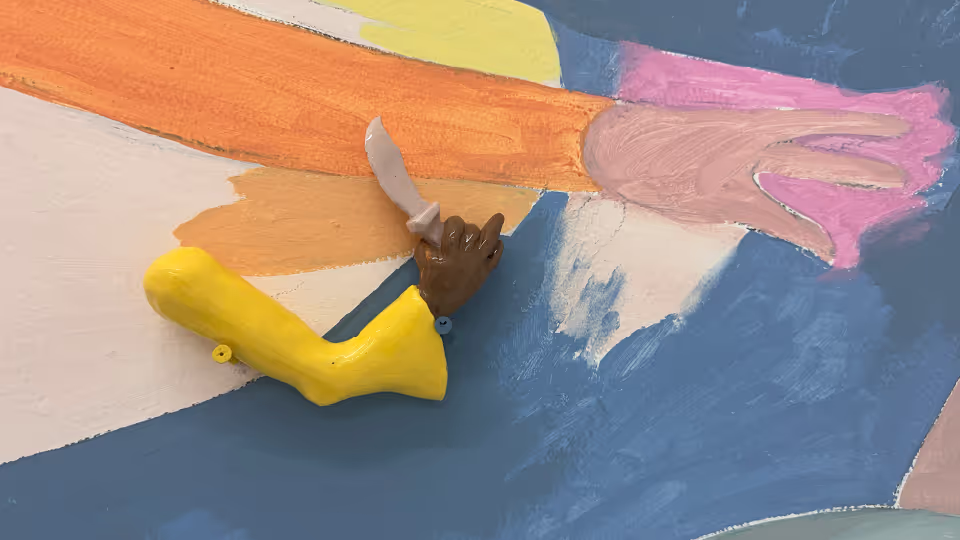



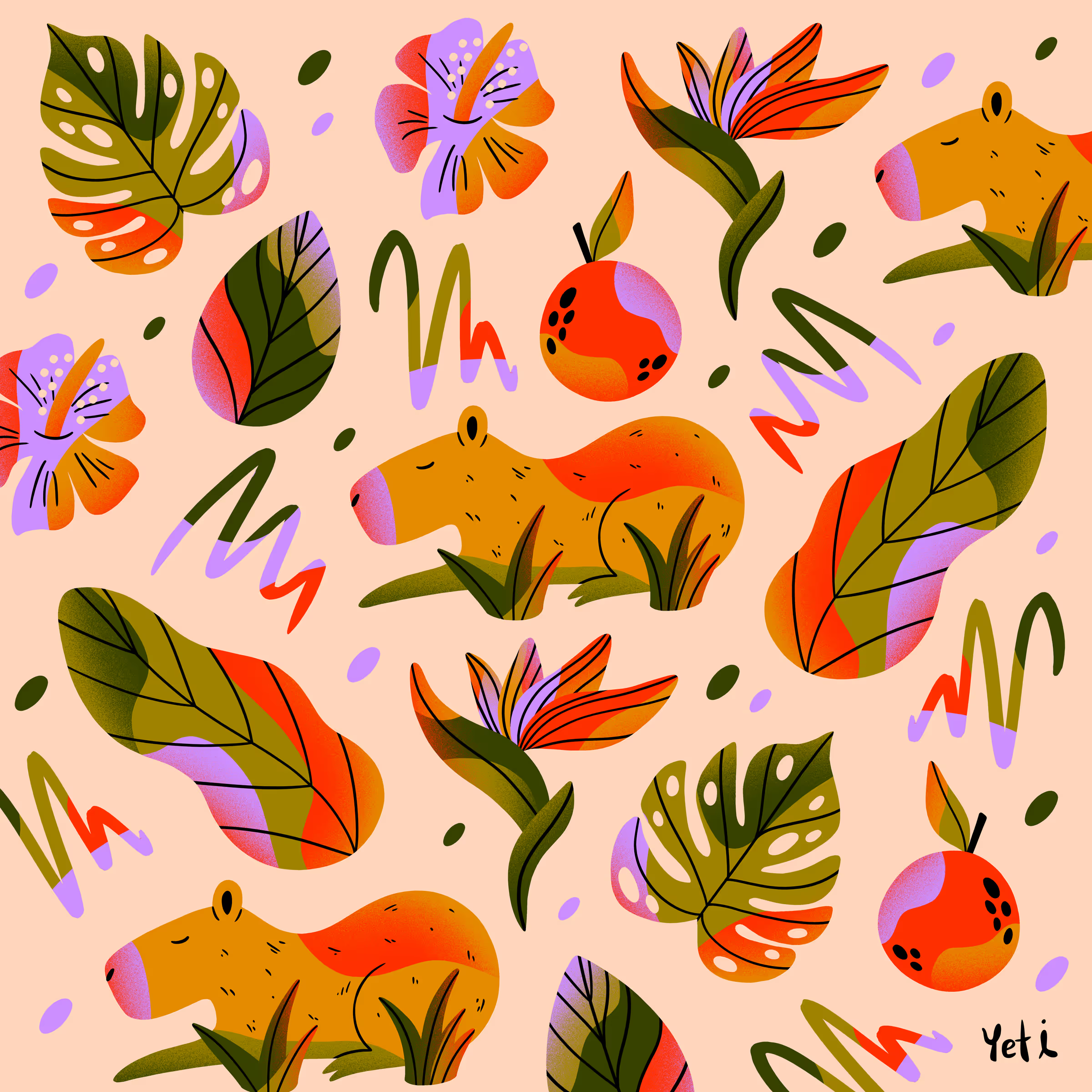

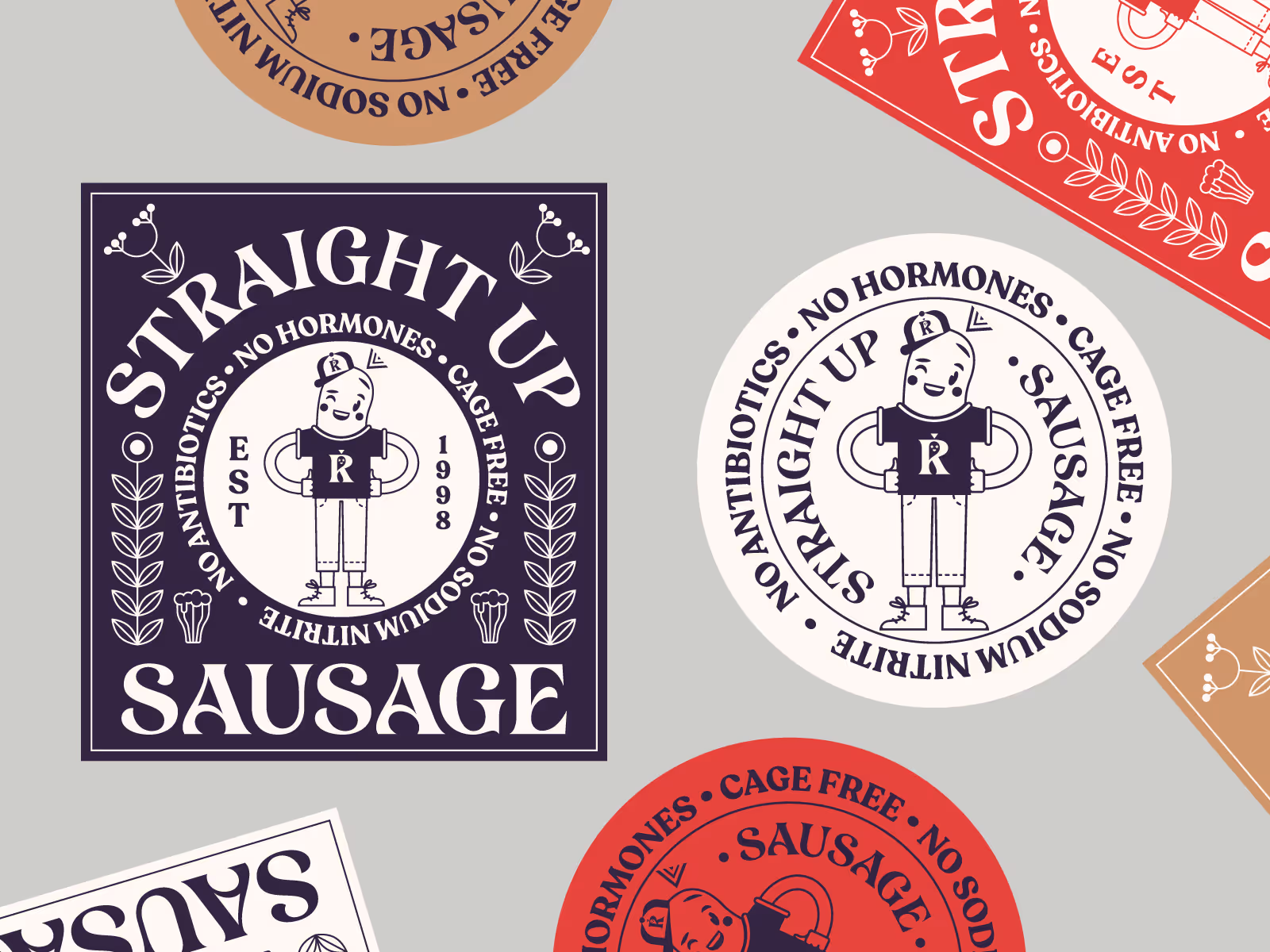
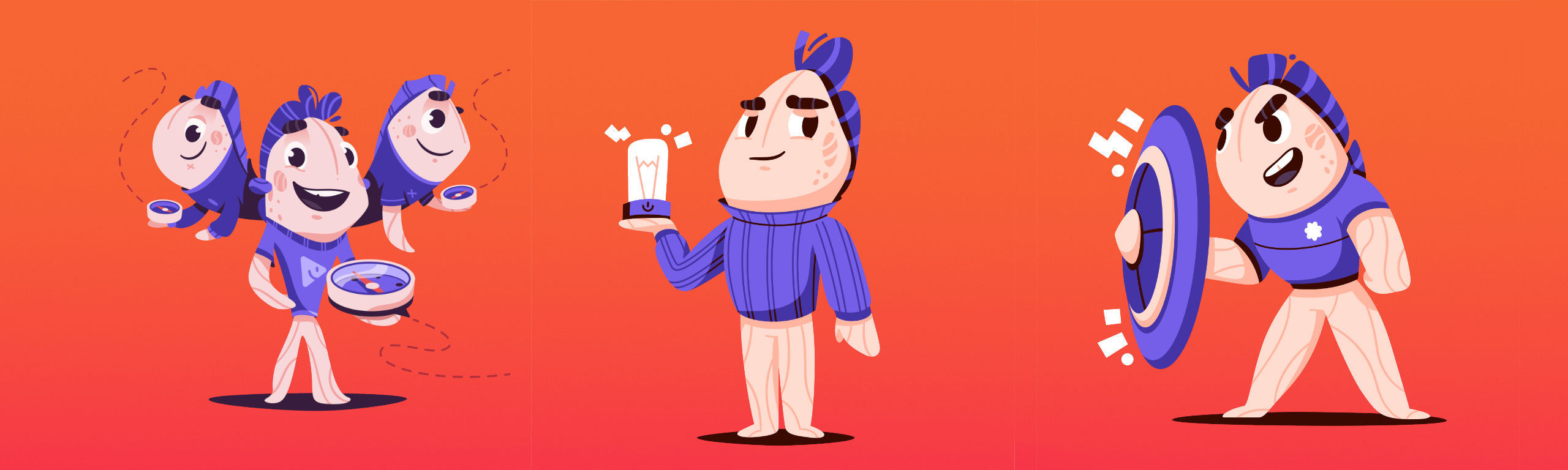
Characters above created by Dima Moiseenko for Salmondo
Characters are the only brand assets allowed to have opinions – and that’s what makes them powerful. They create moments, become a part of culture, and give your brand a voice with warmth, and sometimes …weirdness.
Engagement, storytelling, and emotional connection are unquestionable factors of brand success, and well-crafted characters and mascots are doing some serious heavy lifting. They’re not just cute faces or comic relief, they’re vessels of personality and cultural relevance. In many ways, a brand’s character is its emotional shortcut.
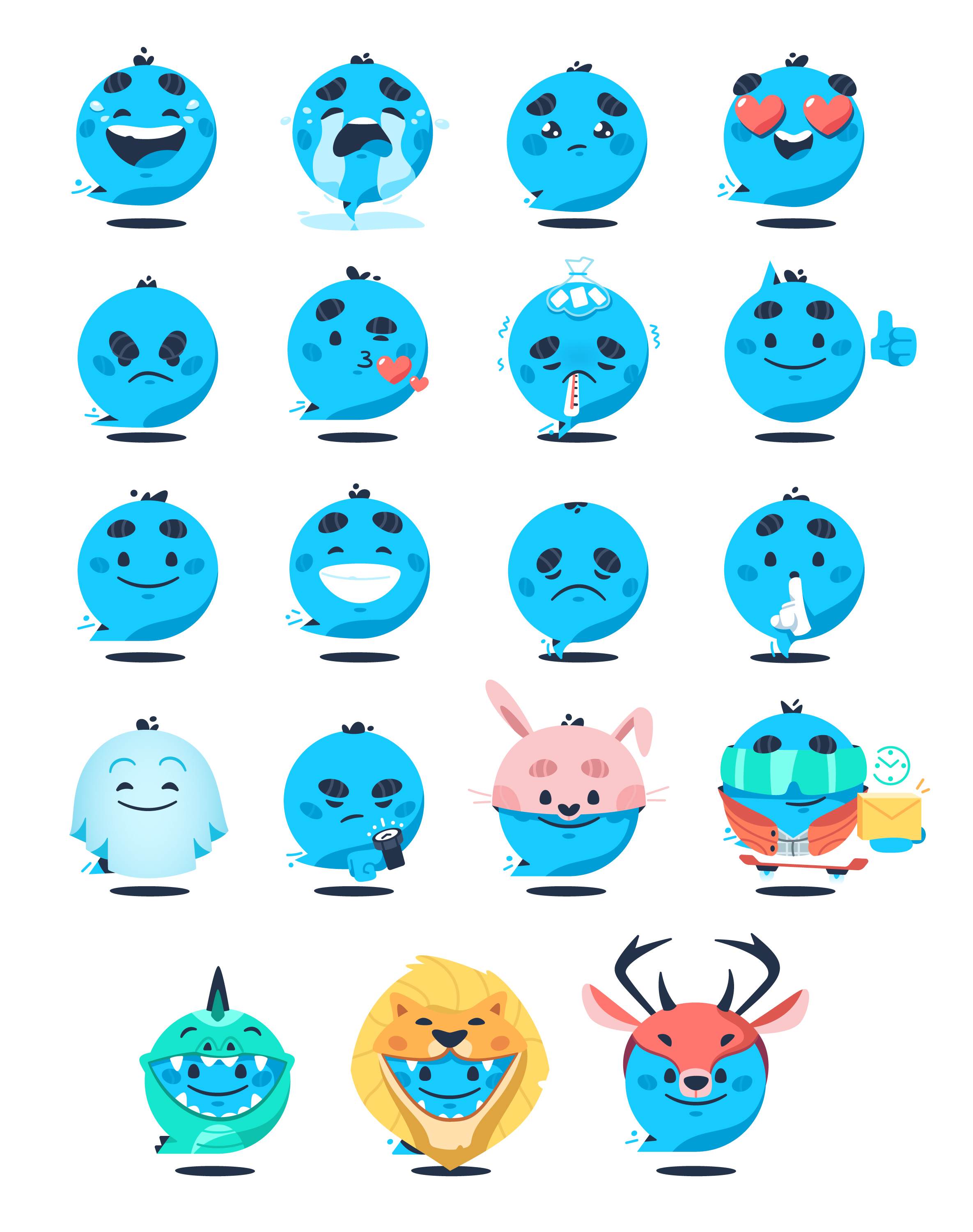
The psychology of character design is subtle, and deeply rooted in how we, as humans, interpret personality through shape, movement, and gesture. By personifying abstract concepts, good character designers turn concepts into human experiences, making the core message both understood and felt almost immediately.
While most brand mascots and characters aren’t human, they do tend to have human characteristics, or at least, we need them to behave in ways we recognise. Whether that’s a sly grin or a sarcastic raise of the eyebrow, we need to design for these characteristics. In short, they need to be relatable and have a distinct personality to be genuinely loved and for us to believe in them — belief is not a random act.
Think: the Duolingo owl, the Geico Gecko, and the M&Ms Spokescandies, right down to the Pillsbury Doughboy, Clippy, and the Energizer Bunny.
But making characters likeable, relatable, and memorable isn’t as simple as slapping on a smile or giving them big eyes. The psychology of character design is deeply rooted in how we interpret personality through shape, movement, and gesture.
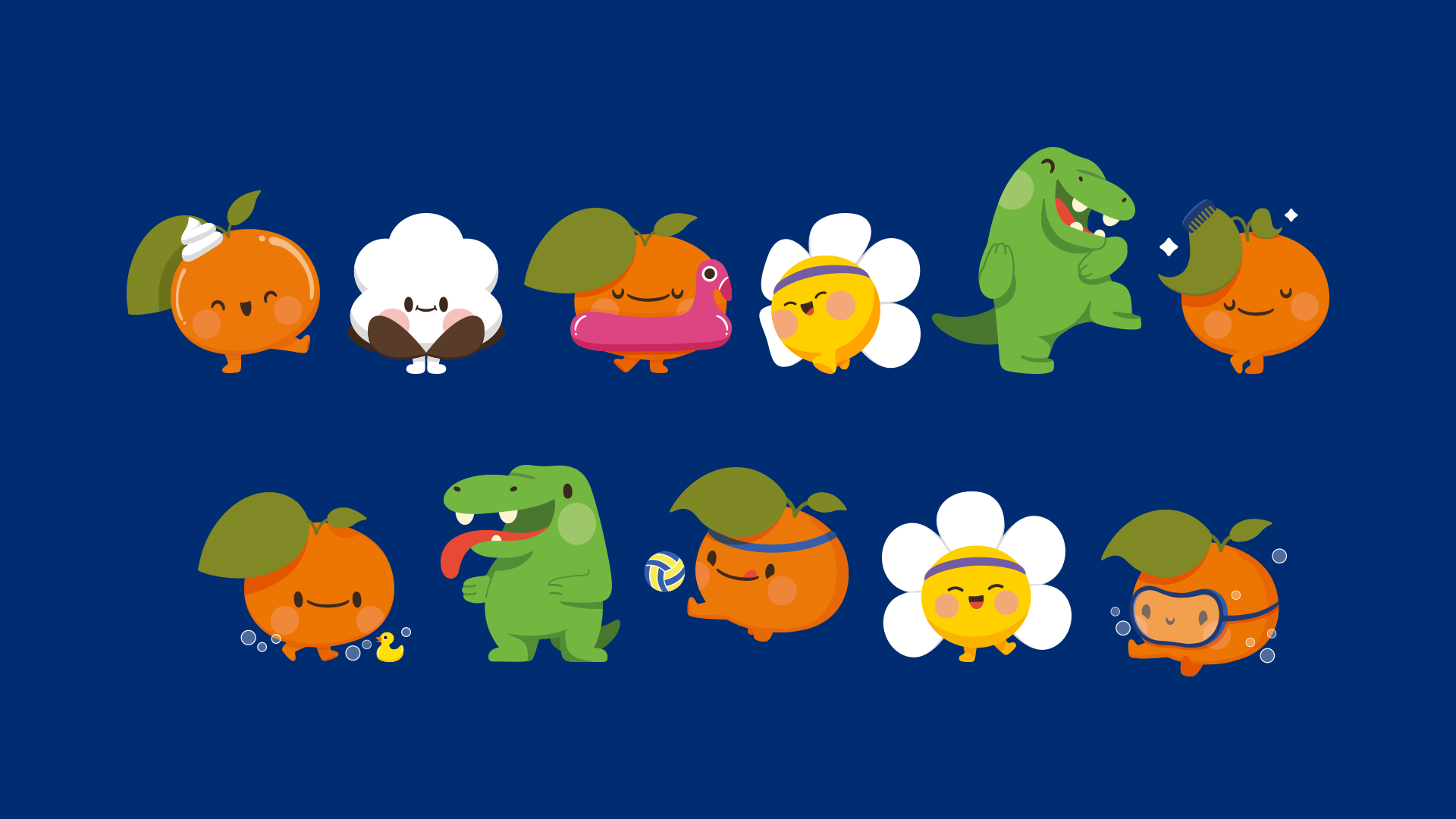
Understanding human anatomy and proportions is a crucial skill for creating realistic or stylised characters. ‘Real’ proportions might help make them feel more relatable but playing with proportions potentially makes them more memorable. For instance, large heads and eyes instantly convey vulnerability and openness and trigger our instinct to empathise and protect — it’s the same reaction we have to babies or puppies.
Circles and organic forms are pleasing to the eye, and can symbolise unity, creativity and human irregularity. By contrast, more dynamic or angular shapes like triangles can signal danger or unpredictability, hence they’re often used for villains or edgy sidekicks. This translates directly into how audiences perceive the brands these characters represent.
Successful characters often blend these elements intentionally. For instance, giving a round-bodied character slightly angular eyebrows might hint at mischief without compromising their likeability, and reflect a brand’s swagger and disruptive nature without tipping too far into angry or unlikeable territory.
It takes a careful hand to create a character that can hold that tension and still land the message just right.
The other bonus is that a well-designed character can create an ecosystem. It’s adaptable to animation, social media, merchandise, and interactive experiences. And having a character inhabit all those environments creates brand continuity and therefore deepens audience attachment.
Duolingo’s Duo (RIP) is a great example of a character that translates across environments from an assertive bird on an app to a costumed-human on TikTok and whose visual design and storyline have developed over time, from a flat, lifeless bird to a rich, 3D character who gets sick, gets angry, and even dies. Though it has a simple design, it is capable of a wide range of emotions, including crying (which, according to The Verge, helps trigger guilt so you’ll practice your languages!)
As Duo the owl showed us, a well-imagined character will embody the richness of the history, ethos, values, and the future intent of a brand.
In a landscape of bland homogeny, where brands fight to feel more human, characters show up, get loud, and make us feel something. The successful examples of mascots and characters have the same things in common: universal appeal, resonance, and emotional capacity. They bring the brand’s heartbeat to the surface, and that’s exactly what audiences crave.